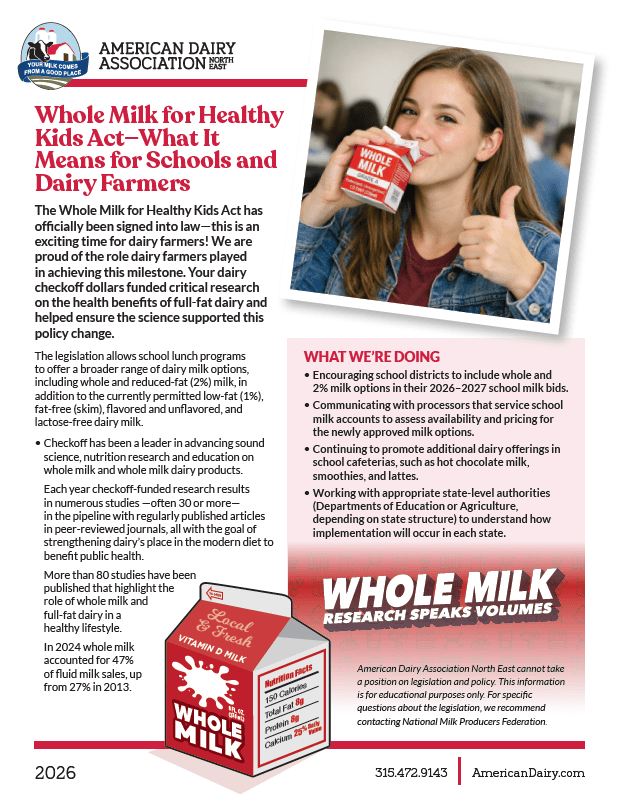
As implementation guidance is released by the USDA, we are working to support schools across our region, and keep dairy farmers informed every step of the way.

What Changed?

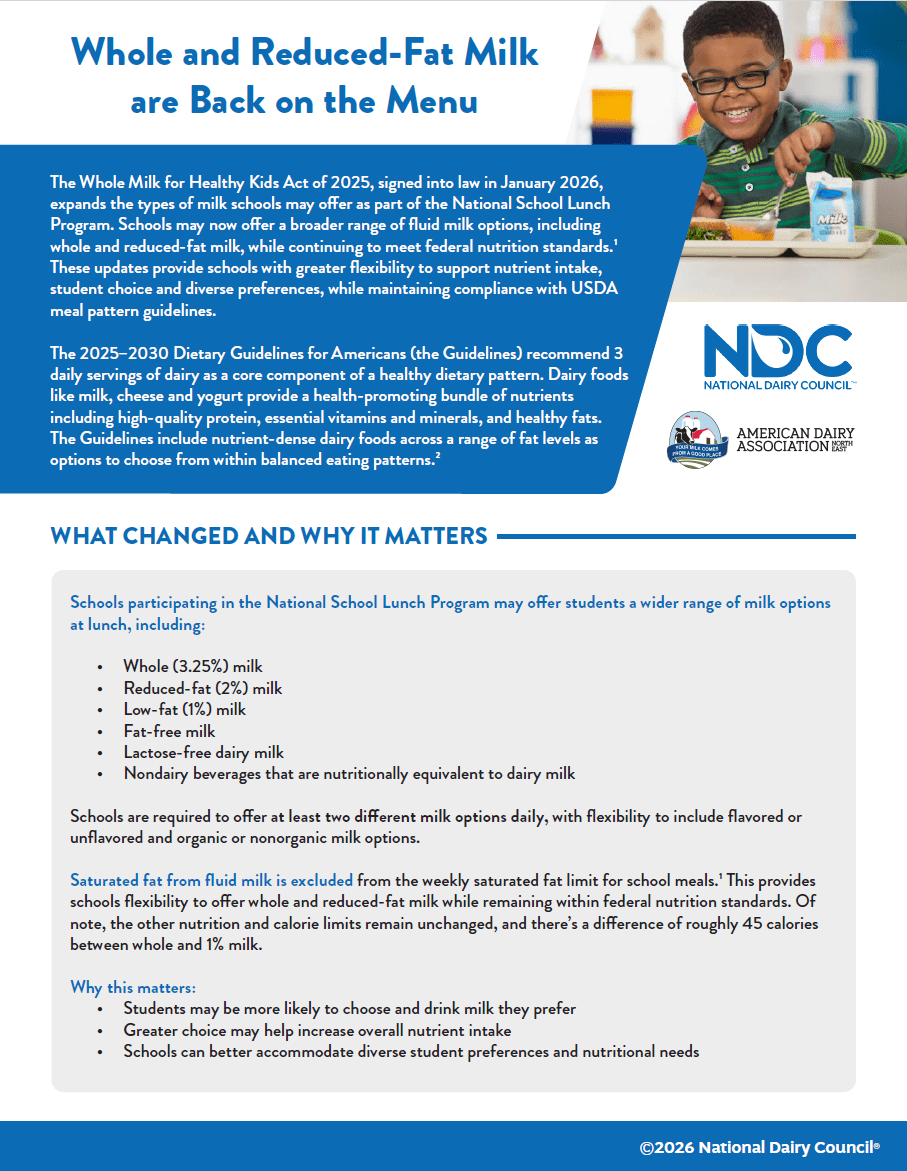
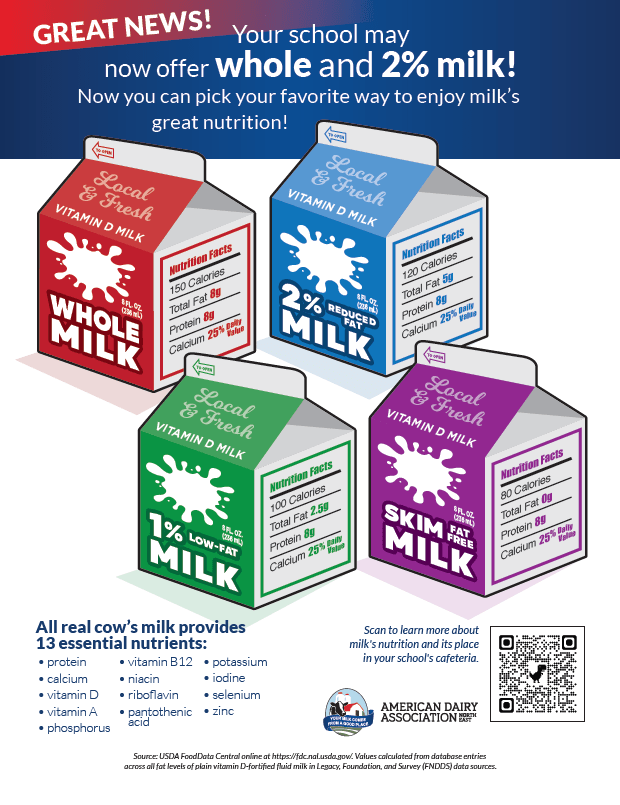
The Whole Milk for Healthy Kids Act allows schools participating in the National School Lunch Program to offer a broader range of milk varieties at lunch only, including:

  • Whole milk (full-fat)
  • Reduced-fat milk (2%)
  • Low-fat milk (1%)
  • Fat-free milk (skim)
  • Lactose-free and lactose-reduced milk
  • Flavored or unflavored varieties (within added-sugar limits)

This expands flexibility while maintaining existing nutrition requirements.

When Does it Take Effect

Schools may begin offering WHOLE MILK immediately. Schools will need to work with dairy processors based on logistics and availability.

Implementation will follow federal guidance issued by the USDA Food and Nutrition Service.

Not all schools may immediately expand offerings. Changes are expected to roll out gradually as districts update menus and contracts.

Why Expanded Milk Choice Matters

Expanding milk variety gives students meaningful choices at the serving line. When students can select the milk they prefer, they are more likely to include it with their school meal and drink it.

What ADA North East Is Doing

Supporting Schools

  • Helping schools know about the new options in milk varieties
  • Encouraging schools to offer whole and 2% milk
  • Providing educational resources aligned with federal guidance
  • Sharing merchandising ideas and menu tools

Supporting Dairy Farmers

  • Monitoring federal and state-level updates
  • Sharing information through the Checkoff Check-In and website updates about what farmers can do to help
  • Continuing to position dairy as a trusted, nutrient-rich choice in school meals
Frequently Asked Questions

We are providing whole milk information to the over 1,800 school districts in our marketing region.

The cost for schools to serve whole milk will depend on the individual milk supplier, as they set the prices that schools pay. Whole milk is generally more expensive than low fat varieties.

Schools have the option to offer whole and/or reduced fat (2%) milk, in addition to low-fat (1%), fat-free (skim), flavored and unflavored, and lactose-free dairy milk – however, it is not mandated. Additionally, there are many reasons your local school district may not have added whole or reduced fat (2%) milk:

They are putting it on their bid to vendors/processors for the 2026-2027 school year (read more below).

Their milk supplier doesn’t have whole milk available in half-pints.

Whole milk tends to cost more than reduced-fat varieties. A few cents per carton adds up quickly when stretched across an entire school population.

Most schools use something called a bid process to decide which companies will supply food for their cafeterias. During this process, different vendors submit proposals offering their products and prices.

School food service teams review those proposals and choose suppliers based on factors like price, reliability, and whether the company can consistently deliver what the school needs.

This process usually happens in the spring, as schools plan their food purchases for the next school year.

Many processors do not currently have a flavored milk that meets the reduced sugar guidelines. They will need to reformulate their products to meet that criteria.

Visit https://www.idfa.org/healthyschoolmilk for more

The legislation only covers school lunch. It is anticipated school breakfast will be included in the future.

Use the resources below and –

  • Contact your milk supplier
  • Contact your school food decision-makers
  • Contact your school board

60% of all milk sold at school is flavored milk.

Resources